The hassle probably. And the delay. Expense doesn’t seem likely, given what digital cameras can cost.
VB
The hassle probably. And the delay. Expense doesn’t seem likely, given what digital cameras can cost.
VB
In my initial post, I mentioned out of the camera, so that would mean no manual manipulation of the image.
A similar situation obtains with recorded music, including vinyl - unless you make your own bootlegs, with few exceptions the finished music you listen to has been manipulated to a similar extent as a photograph.
So the camera is doing all the manipulation. Why is automatic manipulation ok? Like I said before, which manipulation mode is better? Which settings in the camera? All those things are being done at some point. The same with film, which film, which developer, what exposure, what contrast paper do you print on. There is always manipulation of some form going on. Why is the in camera manipulation better or more truthful/accurate than doing it in lightroom? It isn’t.
What about those great Ansel Adams B&W landscapes being taken using a red filter?
Funnily enough he was part of the movement to push truthful/accurate photos. Still manipulated every minutia.
“Pure” photography Group f/64 - Wikipedia
To be fair, back in the day when the camera was ‘just’ lenses and apertures and shutters, it was possible to make a system which did an objectively neutral, near zero-interference job of reproducing an image at the image plane. But you’re right when it comes to everything downstream - in particular the film. It’s also possible to mess with things upstream (filters, limiting depth of field, moving the camera during the exposure etc etc) if the photographer wants to. But they’re not obliged to.
VB
Well yeah, by camera I suppose I mean “camera body”
When I shoot film I use an old Minolta with a dodgy light meter. Which usually means I need to correct the exposure somewhat in the dark room. Or worse I get the development a bit off (too hot in the kitchen) etc etc. Colour film was horrific, thank god for digital.
Except that lenses aren’t objectively neutral and choice of focal length, for example, has a huge impact on how the image is captured. The image produced by a wide angle looks very different to that from a telephoto when taking an image with the same framing (by adjusting distance)
Go on, explain it again in a different way. You haven’t succeeded until the glazed look has gone.
True, but that just reflects the complexity of reality. Our eyes give us one subset of that complexity. Choosing a lens with a different focal length allows us to choose a different subset. I guess the point I was trying to make (and didn’t, at least not very effectively) is that none of those subsets is a distortion. They don’t introduce anything which wasn’t there in the original, or change anything that was there into something else, in the way that film with a non-neutral white balance, say, can.
VB
The point is that there’s no such thing as an ‘original’ image - everything is rendered somehow, either by our perceptual system or a camera and associated processing.
At the end of the day, a camera’s job is to capture light but how it’s processed is kind of arbitrary.
Then these stuff like like light field cameras, which capture light, but also directional information allowing all sorts of fun shenanigans like post focus.
So where does that leave us?
Not very helpful, I’ll admit. 
Optical information extraction was only ever peripheral to what I used to do. But it did matter a lot to some people.
The SDI project I worked on in the US was in two parts. My part was basically concerned with building a suitably bright torch to illuminate the ‘threat cloud’. There was (apparently - we never met them and the navy was never inclined to dicsuss them) another group somewhere working on the other part. They’d convinced the navy that it might be possible to use image processing to identify the handful of warheads among the few thousand (?) pieces of chaff that the Russians would pack round the MIRVs. Our part looked like working. But the word was their part didn’t. It seemed it was based on knowing, in advance, what the MIRV looked like rather more accurately than they actually did.
I did do a bit of work on 3D optical fields for the DNA damage people
but that was going the other way i.e. creating the intensity distribution they wanted and then imaging its effects rather than trying to learn about something which already existed.
VB
The light field stuff bends my brain!
So are we agreed that conceptually what an image is is quite a slippery concept?
And that’s there’s actually no such thing as ‘out of camera’* (or was ever) at least in the sense being discussed here.
*Yes digital cameras produce JPEGs files directly, but only as a result of a processing pipeline which includes many stages and includes arbitrary decisions taken by the people who wrote the software rather than the photographer as to how the image should be rendered.
Down with algorithms.
Well, I think it can be as well-defined as we want it to be provided we specify all the constraints and conditions we’ve applied. But I don’t think people do that very often.
In general use we only ever consider an image as representing an intensity distribution (and a chromatic one too, of course, if it’s in colour). But there can be a ton of info in the phase distribution too. It can let you ‘see’ the density variations in air, for example
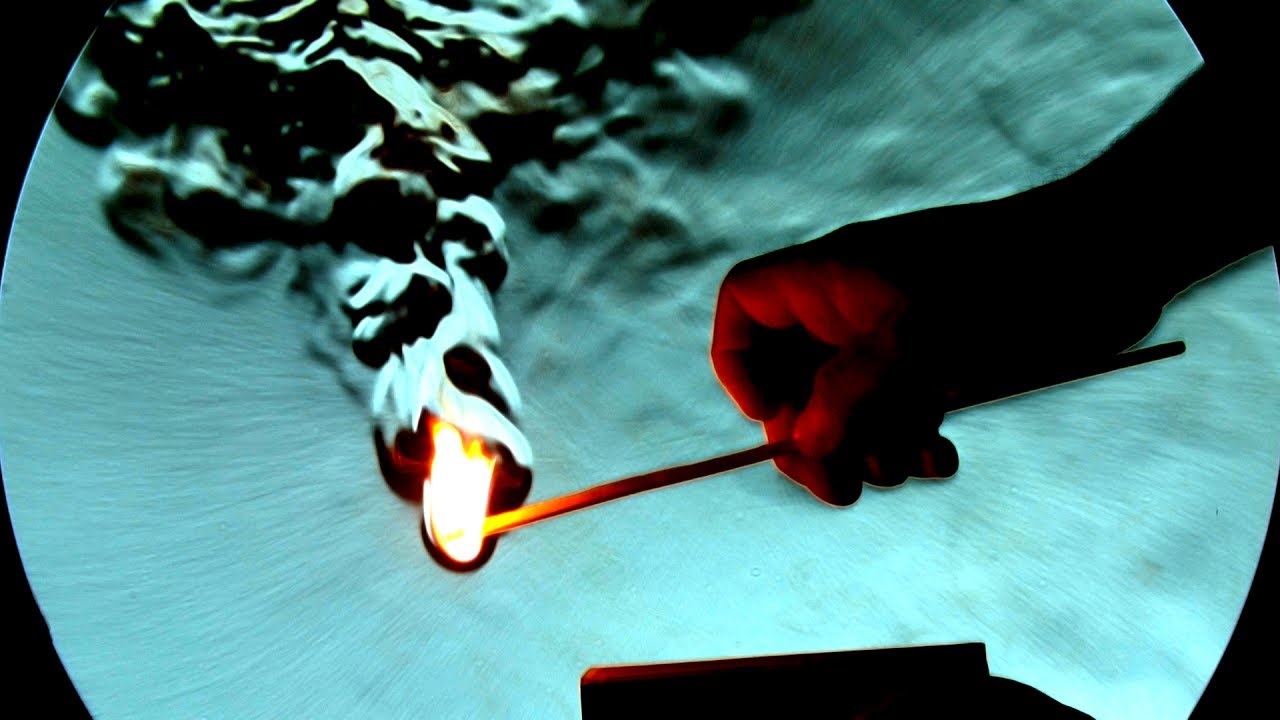
VB
Sounds pretty arbitrary to me, depending on what you want to do with it!
I was watching an episode of this last night (first time I’ve seen it) which is like bake-off or somesuch but with themed photography. Some of the participants were slightly limited and there was some very funny (but also brutal) judging going on.
A rare outing for my 300mm lens, I was off work last week and noticed a kitten stalking a squirrel but the squirrel was actually dragging its back half of its body around, and managed to both out fox the kitten and get away (pulled itself up the wall and over!) I could not see any ‘wounds’ so I can only think it may have fallen out of a tree?
 Southbank, London. by Rick Francis, on Flickr
Taken during a long walk back to the station after doing a little job in Mayfair.
I always shoot in RAW to give me the best chance of obtaining an image that looks like the scene I’m taking. In situations as above a JPG wouldn’t be able to cope with the dynamic range so if I wanted to avoid burning out the highlights I’d have most of the scene in darkness. Making adjustments is all part of the process for me.
As a side note, the few photographers I know that insist of publishing their images without any manipulation straight out of the camera (JPG’s) often like to remind the viewers of this & tend to have poor camera technique and little knowledge of composition.

