Class D is rubbish.
2 Likes

2 Likes
Only a potato would enjoy class D.
I see someone’s got a chip on his shoulder…
4 Likes
You should go over there and mash him 
1 Like
Yeah, but I don’t want the peelers getting involved… 

2 Likes
yeabut an eye for an eye, and all that…
1 Like
Puns are the Class D of humour.
5 Likes
Not enjoying the roasting then?
Wot no chip amp pun?
scroll up
I’m open to the possibility but in my own system I’ve not yet heard a class D amp that sounds better to my ears than class A.
Very interested in your long term thoughts @Mrs_Maureen_OPinion as you spend more hours with the NAD.
1 Like
I’m already clear about how this fits into the hierarchy of Stuff, it’s just going to be a case of experimenting a little to find the optimal balance.
The bottom line to finding the right amp for You is how it interacts with your speakers. The Dreiklangs sound brilliant with 10 watts+ if the amp is Quality, but the truth is they sound at their best with a good deal more power than that - though again it has to be Quality.
For you, the power thing just won’t be the case - you don’t need it, which then leaves you to find the sound you like via valves, class A, or whatever…
I still love the benign distortion of good valves, but I’m DONE with the unreliability of the glassware itself, certainly in the form of output valves!
Class A solid state is fab, but I can’t afford anything powerful enough to get the very best out of the Hecos, and if I could, the heat and running-cost is unviable.
The Electrocompaniet monos (nominally Class A, but A-B really), were superb - best of all worlds in many ways, but I just can’t be fucked to tear them apart and service them RN. They may prove better than the NAD long-term, but I doubt it.
Compared with the First Watt, the NAD is immediately more of absolutely everything - most especially capital-R-Resolution: treble is airier and more extended - it’s sweeter and lights up soundstages much better with way more sense of any given acoustic; midrange is more tonally rich and contrasty - yielding (e.g.) more vocal intelligibility and tonal colour with acoustic instruments; bass is more extended but tighter and way more nuanced: e.g. lost bass-guitar lines have definition, form and colour now, rather than being a muffled mumble hidden in the overall bass growl.
This extra resolution does not come at any negative cost - perhaps because both the DAC (Audio Note Kits DAC4) and pre-amp (AudioValve Eclipse) are valve units - so there is nothing strained or overly ‘hifi’ going on: so the NAD never sounds painfully analytical or forensically harsh at-all. It’s just the right kind of neutral, and another big step towards the sound I hear in my head!
I’ve no doubt one could move higher up the hifi food chain and get better results - but even if I could afford such a move, I certainly couldn’t afford the upgrades required to match the rest of the system to it!
5 Likes
That’s a nice looking bit of kit, seen lots of good reviews of the Purifi based amplifiers. I’m still quite impressed with my Lyngdorf TDAi2200 which I believe is a digital/class-d design.
1 Like
Tru all dat.
I thought your Electrocompanient monos would be end game for you - what’s up with them?
Yep and that same paranoia feeding sense of unreliability is why I have a Dartzeel pre which has tube like sound w/o the fear, same with the SIT mono’s which as you say need no gain/power.
2 Likes
Bulgy caps - need recapping - the biggest problem is how much of a lazy cunt I am.
3 Likes
Switched to single-ended earlier - as expected it halves the gain, and in the process loses a sllightly ‘frantic’ edge which creeps-in with heavily-compressed playback material. Suspect this is down to a better impedance match with the pre-amp, and not the miniscule reduction in distortion measured by ASR.
Also has the minor benefit of doubling the arc of adjustment on the volume control.
Nice. Very, very nice.
3 Likes
Strongly preferring single-ended with this pre-power combo.
The AudioValve pre outputs pretty serious voltage and current - it could probably run >105dB/W/M speakers - and the signal was just too ‘hot’ using balanced outputs.
I started out connecting single-ended terminals with a cheap pair of aerial cable coax RCAs, which sounded good - but solid-core cables often seem slightly off tonally to me, they’re not really the optimal stranding for the frequencies involved I guess, and I was missing some resolution in familiar material.
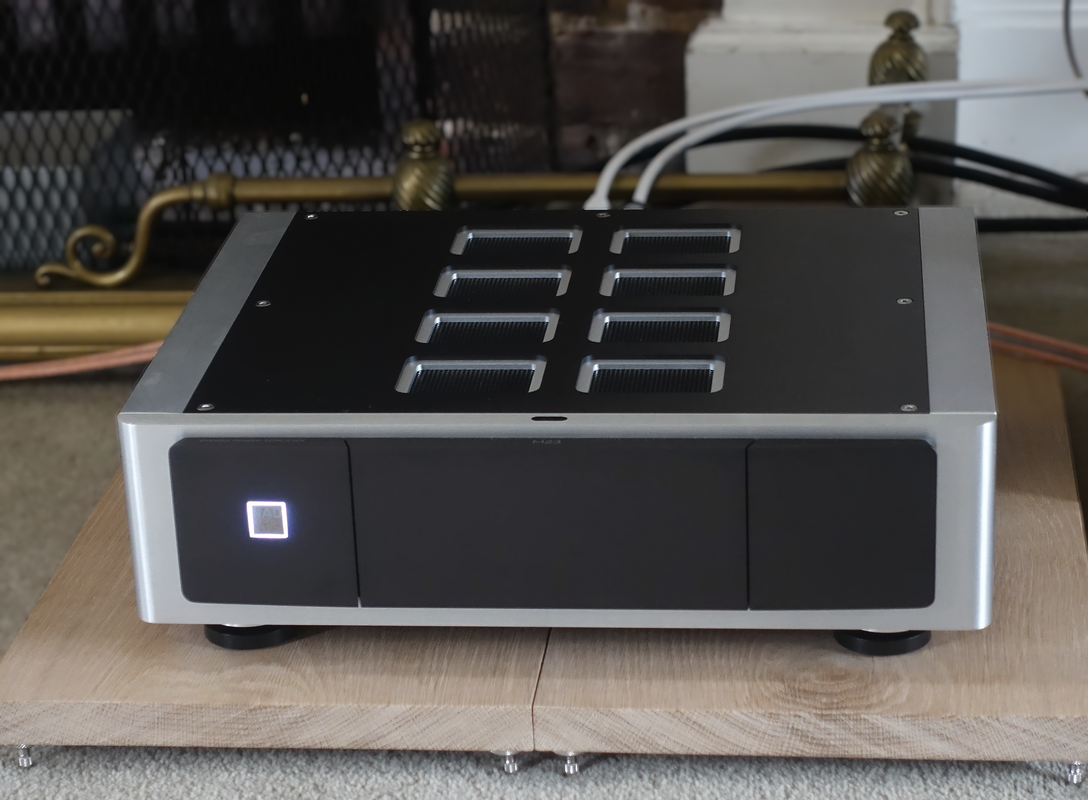
So I inserted a pair of Viablue’s ‘reference’ ICs (<£200 back in the day - silly for wire, but it’s 2024 and £20,000 isn’t unknown now…). These are reassuringly thiccc…

…because they use air-spaced conductors to try to reduce capacitance in the cable.
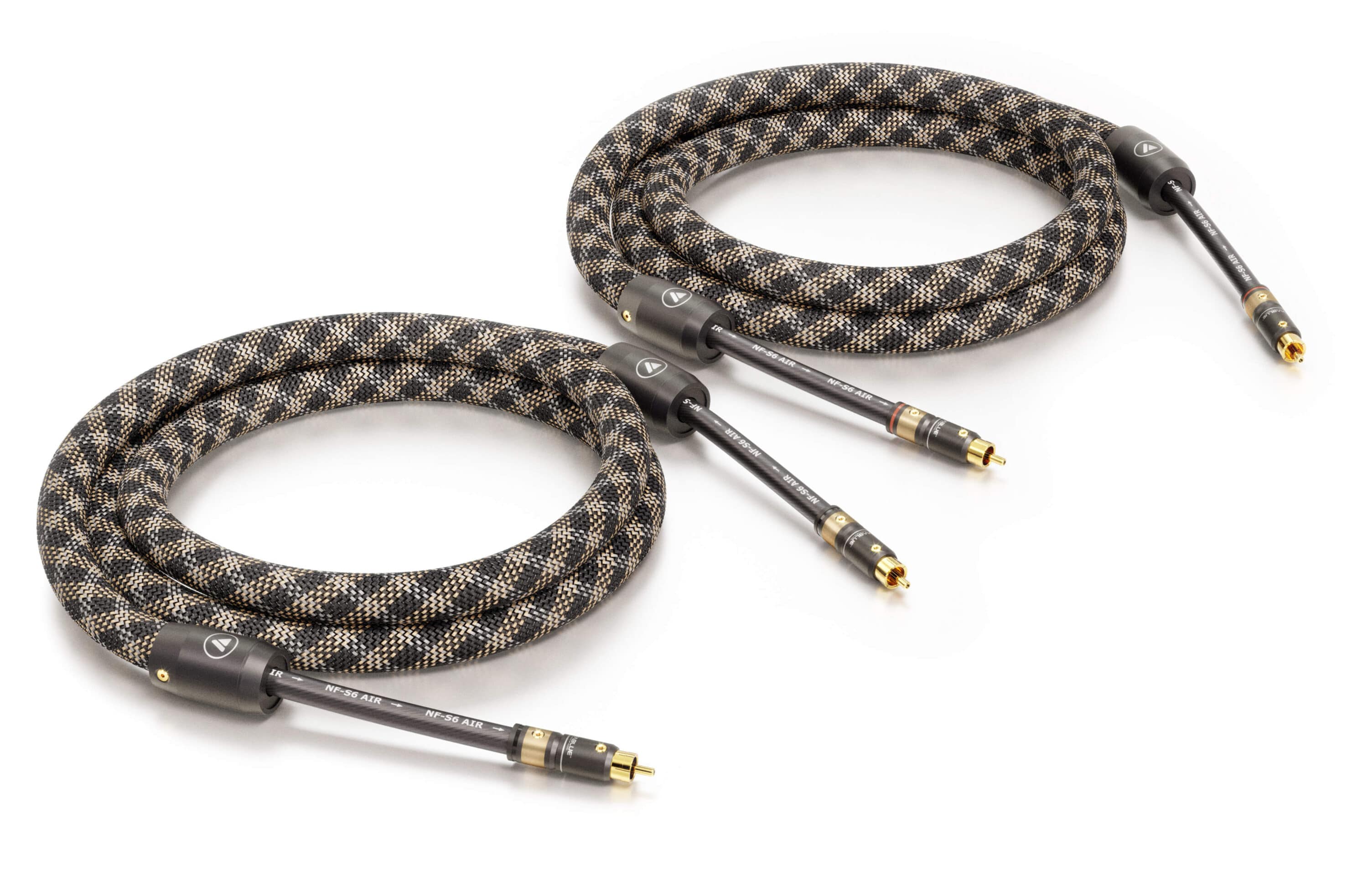
Result: the fucking-good got even better. Best sound I’ve ever had here, full stop. Really bloody enjoyable. Cables don’t matter.
Except when they do.

13 Likes
GO NAD !
2 Likes
NADine Dorries.
Coincidence? I do not think so.
5 Likes